


An open society must be a tolerant society, but therein lies a paradox
A new kind of think & act tank to tackle the biggest issues
. . . because, with only 162 already, the UK desperately needs another think tank!
Popper’s paradox of tolerance
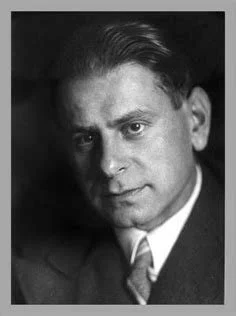
“Unlimited tolerance must lead to the disappearance of tolerance. If we extend unlimited tolerance even to those who are intolerant, if we are not prepared to defend a tolerant society against the onslaught of the intolerant, then the tolerant will be destroyed, and tolerance with them.”
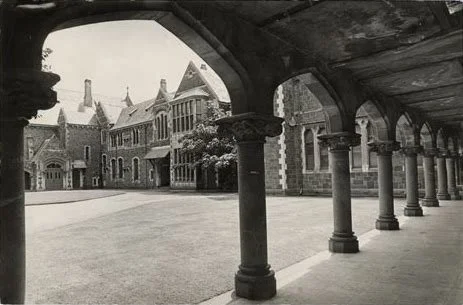
Karl R. Popper, Open Society and its Enemies, written while working at Canterbury College, University of New Zealand (pictured)
Ahhh . . . Yes, we know. The world is awash with think tanks, particularly in the US, but also in the UK. The problem is that almost all look at the wrong problems in the wrong way, suggest unworkable solutions to their problemes du jour without political or economic context. Or they are run by lobbyists or by and for neo-Marxists or laissez-faire fundamentalists. And if not, they think their audience is legislators. While many excellent ideas emerge from think tanks, many are part of the problem of partisan rancour and their signal is lost in the noise.
We aim to change that.
A broadly-focussed think & act tank based in London emphasising a classical liberal democratic ideology in the tradition of J.S. Mill & Popper.
A think-and-act tank based in London, Futuresphere will focus on the changes that science and technology will bring to our lives in the future, Based on sound political economy, Futuresphere will address complex social problems and contentious issues holistically from a range of disciplinary perspectives. It will address all areas of public policy and global affairs, adopting a liberal position emphasising the importance of open, competitive markets, fair, democratic institutions and individual rights, duties and responsibilities in a liberal society.
Futuresphere already exists virtually. While it is yet to commence operating, we have already prepared a substantial website that indicates the breadth and depth of focus we intend.
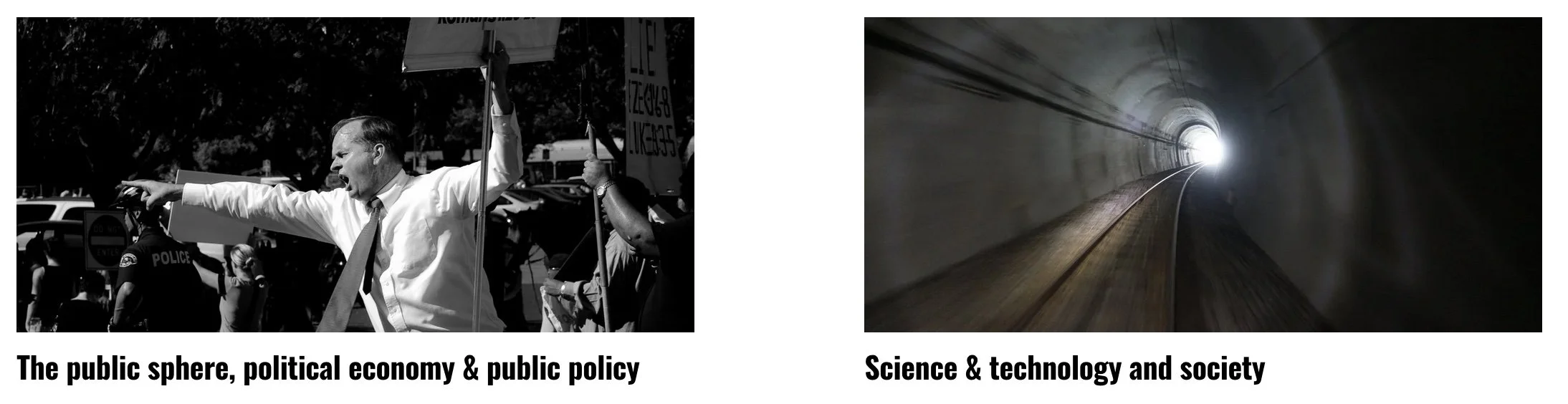
Its research themes will centre around the following key areas, reflecting the unifying themes of uncertainty and the future and how a liberal democratic society copes with the change that current and pending developments in science & technology will occasion socially, politically, economically and environmentally.
These topics raise multiple different types of questions — in the philosophy of knowledge in social sciences, in motivation and action fields in both individual and social psychology, in the economics of institutions, and in the role of the state. While the latter is common terminology in public economics, as Popper tells us, also in Open Society, this formulation invites a historicist or essentialist mis-reading of social & political phenomena and of the historical emergence of the state. Popper rightly proposes focussing on the demands of the state which, in his formulation becomes the politically (not economically) protectionist theory of the state, a state which is vital to ensuring that citizens’ rights, reciprocal duties and obligations are respected and enforced. The trade-offs are unavoidable and must be satisfied politically in the democratic public sphere, just as the limits of tolerance must be negotiated to maintain a tolerant society.
As Popper says,
“there is no freedom if it is not secured by the state; and conversely, only a state which is controlled by free citizens can offer them any reasonable security at all.”
Within Popper’s protectionist theory of the state, there is no room for the anarcho-minimalism of the US formulation of libertarianism; such a formulation offers no practical protection to the rights of its citizens. Nor is there room for laissez-fare market fundamentalism which fails to acknoweldge the economic realities of predation and exploitation, pointed out by Adam Smith in 1776, but somehow glossed over by modern fundamentalist advocates of his invisible hand. Popper’s point is that the hand must, at least in part, be visible and operable to allow competitive markets to operate for the benefit of all.

Futuresphere’s wider role in the combined initiative
Futuresphere will not be just another think tank. That is why we describe it as a think and act tank. The concept behind Futuresphere is that it be a thought- and research-driven action tank.
Futuresphere will also contribute to XPLN editorially, co-ordinating the topic focus of debate and information packages. Futuresphere will draw on XPLN for production facilities and capabilities to assist with communicating its proposed policy formulations widely and persuasively.
XPLN will draw on Futuresphere research personnel as panel debate participants.
Academic staff from University of ProSPEC will also participate in Futuresphere research projects, providing regular publication opportunities. Futuresphere’s research programme will also provide up-to-the-minute practical examples of policy development for use on ProSPEc courses.
Most importantly, Futuresphere will act as the convenor of policy colloquia in which invited guests and experts will particpate in multi-day policy debates and planning sessions at the country property & estate. These events will aim to build coalitions of interested parties to act in a co-ordinated fashion on public policy issues and initiatives to maximise the probability of influence with political figures developing policy agendas and those formulating policy responses to agenda issues.
Futuresphere will be a company limited by guarantee and will also probably establish a for-profit subsidiary to undertake occasional consulting roles.
Like other think tanks, Futuresphere will aim to hold periodic seminars on topical issues of policy concern for corporate, NGO, public sector and individual audiences.
In due course, funding will come through both corporate subscription and private membership tiers offering escalating levels of access and event participation.
Futuresphere will be a company limited by guarantee and will also probably establish a for-profit subsidiary to undertake occasional consulting roles.
Futuresphere will be new kind of think & act tank that will concentrate not only on outputs (the think part) but also outcomes (the effects and consequences of the act part).
John Dewey would be proud.