

Navigating through the proposal
⇨
⇨
⇨
4.
Fit with your funding agenda
⇨
⇨
The fit of this request for funding with Open Society Foundations’ agenda
Open Society Foundations is the natural choice of philanthropic organisation(s) for us to approach for funding. We are yet to approach any other party. Also, we are willing to delay doing so until Open Society Foundations has had a chance to review our proposal and to speak with us directly, should you wish to do so. We would welcome Open Society Foundations’ active and on-going involvement as a participant and, should you wish to do so, as participants in subsequent rounds of fund-raising.
Why?
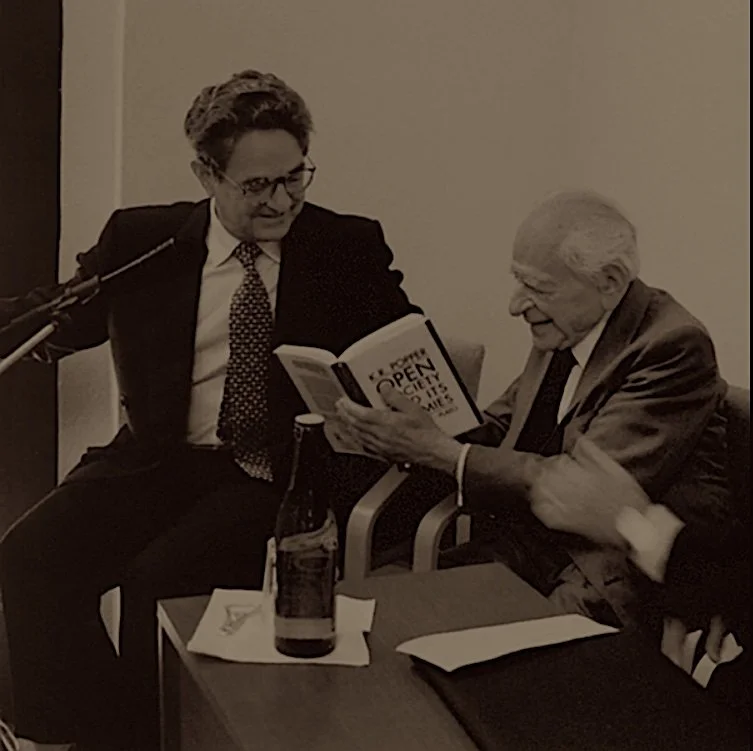
Initially, our focus will be on the wealthy, Anglophone world. We believe that the possibilities of liberal democracy, of the open society, in Popper’s terms (or in the terms later stipulated by Rawls’ openness principle), are yet properly to be realised. And we believe recent retrogressive institutional developments in some of the leading democracies and surge in support for populist nationalism are worrisome. As modern European history demonstrates and as Reagan pointed out, “Freedom is never more than one generation away from extinction.”
For all its failings and flaws, the Westminster system of government and the Anglophone republican offspring it spawned, the United States of America, offer the world the leading and most durable, if disturbingly partial, examples of realisation of the open society of Popper’s vision. The thought and language of Jefferson leans heavily on the thought and language of Locke as he sought to justify the Glorious Revolution of 1688 and the focus of the Bill of Rights in the following year to prescribe the boundaries of prerogatives of the monarchy. These Anglophone liberal democracies, their Francophone and modern European equivalents need to remain purposefully liberal, substantively democratic and highly-performing socially and economically to provide creditable examples to other, less politically mature states to adopt or to fashion the pluralist institutions needed locally to encourage, sustain and progress liberal democracy.
That is, we share the same vision of pluralist liberal democracy formed from the same intellectual sources as the founders and leaders of the Open Society foundations. Our work will complement that of the Open Society Foundations, initially in the UK, and Open Society Foundation personnel and contributors to The Ideas Letter would be natural participants in Futurephere’s agenda-setting, in the policy colloquiua we propose and as panellists in debates on XPLN.
The fit Open Society Foundations’ themes
Democratic Practice
Even in developed, Western, pro-market liberal democracies, the realisation of popular sovereignty falls well short of the Enlightenment aspirations of moral and intellectual autonomy. There remains much to do to realise the ambition of promoting free and open and informed debate that holds those in power accountable for their actions and holds all citizens to the duties and responsibilities of liberal citizenship.
While back-sliding is an unwelcome development in emerging democracies, it is the corrosion of democratic norms in advanced liberal democracies of Western Europe and in the US that represents the most damaging development in recent years. Those who value liberty and pluralist liberal democracy must fight tenaciously to preserve and enhance the vital institutions of Western democracy.
Equity in Governance
The ambition to counter imbalances of power that perpetuate injustice and fuel division and conflict internationally requires first that these imbalances be recognised and addressed within the powerful, advanced economies. Until those steps are taken, those economies will not provide the examplars needed to encourage less privileged and less democratised states to improve their own governance. Nor will there be an adequate constituency in the advanced economies for assisting less powerful states to develop and, utlimately, to converge with standards to which the advanced economies aspire.
Rights & Dignity
Unfairness and inequity globally are manifestations of differential stages of development, of distribution of natural resources, human, social and intellectual capital and of historic contingencies.
In the developed West,the so-called culture wars have emerged out of ever-expanding, identity-based assertions of rights, while discussion of countervailing & corresponding duties and responsibilities has withered. If liberal democracy is to survive and develop, we must reintroduce notions of duties and responsibilities which have been so important to liberal philosophers from Aristotle's Ethics to Kant's second formulation of his categorical imperative to J.S. Mill's harm principle to Popper's protectionist theory of the state. From these, real maturity (in the Kantian sense) and dignity can be realised in a liberal political and social framework.
Future worlds
The give-away is in the name: Futuresphere, which will be central coordinating function of this initiative. How we understand what may happen in the future is both complicated and complex, always subject to what Bertrand Russell called the problem of induction. and to recursive inter-subjectivity or reflexivity. How we form our prospective view and the role of Popper’s fallibilism and of intuition (discussed by both Popper and Rawls) is crucial.
As explained above, the proposers believe that improving anticipation of future worlds rests on a greater appreciation of the roles of uncertainty and incertitude in a more realist political economy with improved access to and application of knowledge and information between institutions and citizens in the public sphere. Popper’s entire philosophical programme of fallibilism and falsification is built on the essential presumption of uncertainty. As he states in Open Society (added in 1961):
❝ By ‘fallibilism’ I mean here the view, or the acceptance of the fact, that we may err, and that the quest for certainty [the title of Dewey’s 1929 masterpiece] (or even the quest for high probability) is a mistaken quest. But this does not imply that the quest for truth is mistaken. ❞
(emphasis added)
The fit Open Society Foundations’ approach
Advocating for change
We share the recognition that advocating for change, especially for fairness in the Rawlsian sense of openness (though leaving aside his maximin criterion), is an essential step in progressing towards an open society. The fundamental purpose of the initiatives of Futuresphere is to advocate for public policies that align with the requirements for greater openness (in the Rawlsian sense) in our public and private institutions and to recognise the roles of those institutions in our economic, political and social lives. The logic of the convening function of Futuresphere is to build coalitions of support for such policy changes and to act to promote their realisation — that is, advocating for change and influencing to make that change happen.
Ideas & education
We share also the recognition of the crucial role of ideas and education. That recognition is the motivating force behind ProSPEc, which will provide an education of the highest quality in social and political economy and methods and limits of foresight, anticipation and forecasting to students globally using online functionality and some in-person interaction.
We believe the concepts we discuss in this proposal confirms our commitment to the importance of ideas in achieving the institutions and goals of liberal democracy, of the open society.