
Problems of economics
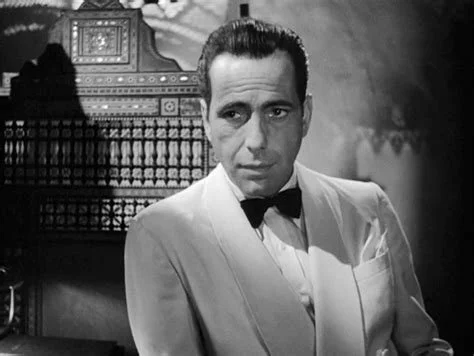
❝ Well everybody in Casablanca has problems. Yours may work out. ❞
❛ A branch of the science of the legislator or statesman ❜ no longer
Modern Economics is Sick
❝ In his Reorienting Economics, Tony Lawson cites this magnificently appropriate quotation by Mark Blaug (1997, p. 3):
“Modern economics is sick. Economics has increasingly become an intellectual game played for its own sake and not for its practical consequences for understanding the economic world. Economists have converted the subject into a sort of social mathematics in which analytical rigour is everything and practical relevance is nothing.”
❝ I believe that on this issue, Lawson, Blaug and I are in agreement: the victory of technique over substance is a chronic problem within modern economics. Although the victory of formalism can be dated to the 1950s (Blaug 1999, 2003), by the 1980s the problem had become much more serious. Because mathematics has swamped the curricula in leading universities and graduate schools, student economists are neither encouraged nor equipped to analyze real world economies and institutions. Arjo Klamer and David Colander (1990, p. 18) reported a survey which showed that only 3 per cent of graduate students on top US economics programmes perceived ‘having a thorough knowledge of the economy’ to be ‘very important’ for professional success, while 65 per cent thought that ‘being smart in the sense of problem-solving’ is what matters, and 57 per cent believed that ‘excellence in mathematics’ was very important.
❝ In 1988 the American Economic Association set up a Commission on the state of graduate education in economics in the US. In a crushing indictment, the Commission expressed its fear that ‘graduate programs may be turning out a generation with too many idiot savants skilled in technique but innocent of real economic issues’ (Krueger et al, 1991, pp. 1044–5). Alan Blinder (1990, p. 445), a member of the Commission, commented:
“Both students and faculty find economics obsessed with technique over substance . . . the many macro and micro theory exams the Commission examined . . . tested mathematical puzzle-solving ability, not substantive knowledge about economics . . . Only 14 percent of the students report that their core courses put substantial emphasis on ‘applying economic theory to real-world problems.’ “
❝ Alarm bells concerning technique displacing substance in economics have been sounding for many years (Ward, 1972). However, although mainstream economics has made some significant theoretical advances in the 1990s, including an increasing adoption of institutional and evolutionary themes, the situation concerning formalism has not got any better.
❝ Perhaps the most serious emerging problem is that the graduate students of the 1980s and 1990s, who are skilled in technique but who have an impoverished understanding of economic principles and their history, are now beginning to achieve positions of seniority and influence in the university departments, associations and journals of the economics profession. Their growing power and influence will ensure that formalism further consolidates its overwhelming hegemony, to the detriment of wider-ranging conceptual and methodological enquiry. This problem is particularly serious in Britain and America, where formalism has achieved its earliest and most complete victory. But the process is delayed rather than absent elsewhere. ❞