

OR
Homo œconomicus as
Homo socialis interagens
A sensible perspective on methodological individualism
Humans as social beings
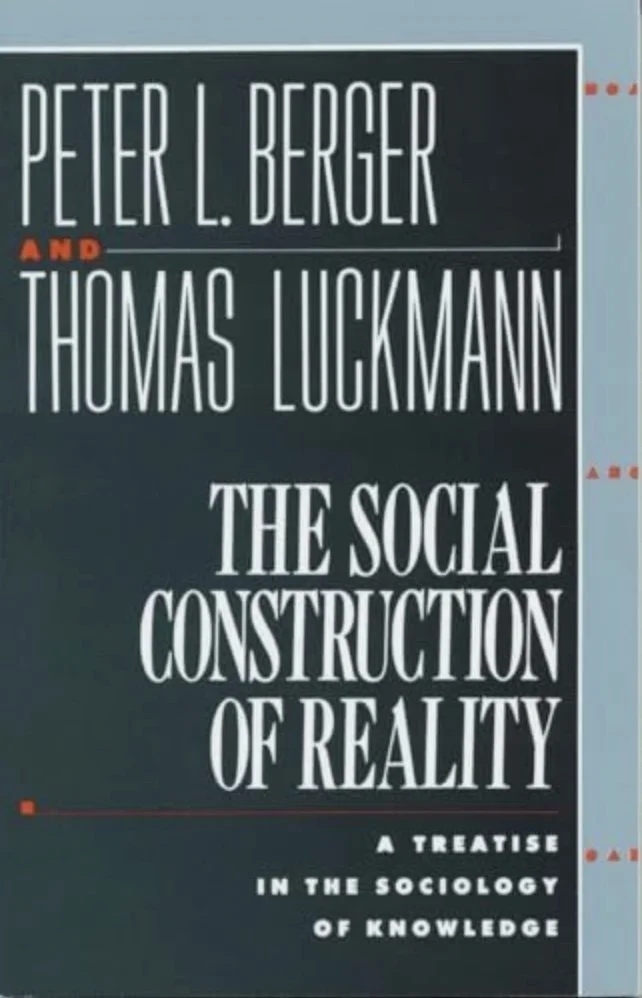
Published in 1966, Peter Berger and Thomas Luckmann’s The Social Construction of Reality has been enormous influential. It is just shame that more of the people it has influenced have not read it, or, perhaps, interpreted it more clearly.
It is usually assumed, by casual readers, to put the sword to the idea, especially prevalent in economics, of methodological individualism. It does not, nor was it intended to do so; its author’s have, subsequently, been explicit on that point. However, it has also been appropriately influential in questioning the naive interpretation of methodological individualism so popular within neo-conservative circles; note neo-conservative, not neo-classical, although there may be considerable cross-over.
Methodological individualism is not an ideological expression within economics, as is so frequently supposed. This is simply an exaggerated, even deliberate, misinterpretation of welfare economics from A.C. Pigou to the present or, if your preferences are more continental, directly from Schumpeter (1908). Instead, as Schumpeter explained:
❝ . . . we must strictly differentiate between political and methodological individualism, as the two have virtually nothing in common. The former starts from the general assumption that freedom, more than anything, contributes to 'the development of the individual and the well-being of society as a whole and puts forward a number of practical propositions in support of this. The latter is quite different. It has no specific propositions and no prerequisites, it just means that it bases certain economic processes on the actions of individuals.
❝ Therefore the question really is: is it practical to use the individual as a basis and would there be enough scope in doing so, or would it be better, in view of specific problems and the national economy as a whole, to use society as a basis. This question is purely methodological and involves no important principle. The socialists can answer it in terms of methodological individualism and the political individualists in terms of their social concept of things, without getting into conflict with their convictions. This way we have achieved something: our question has lost its practical signifiance and has been divested of focal interest. ❞
As Hodgson (2007) notes, the distinction Schumpeter draws attempts to effect a reconciliation of the opposing sides of Der Methodenstreit, the debate initiated between Gustav von Schmoller, the prominent German political economist of the Historical School and Carl Menger, often regarded the principal founder of what became known as the Austrian School (a term originally used derogatorily by Schmoller), on the appropriate methods in and scope of political economy. The extended debate took place in German language academic journals and pamphlets between 1883 and well in to the early part of the twentieth century. In reality, the debate is still alive and unresolved. Some might even consider it unnecessary.
In relation to the role of individualism, however, the simple question arises: what is the alternative level of academic focus. Rather than a socially-interactive perspective, which any realistic social scientist would acknowledge, the answer is holism — the attempt to anaylse the society as a whole entity, without stylised reductions.
undersocialised