

Are contradictions inherent to capitalism?
A brief essay about asking the right questions
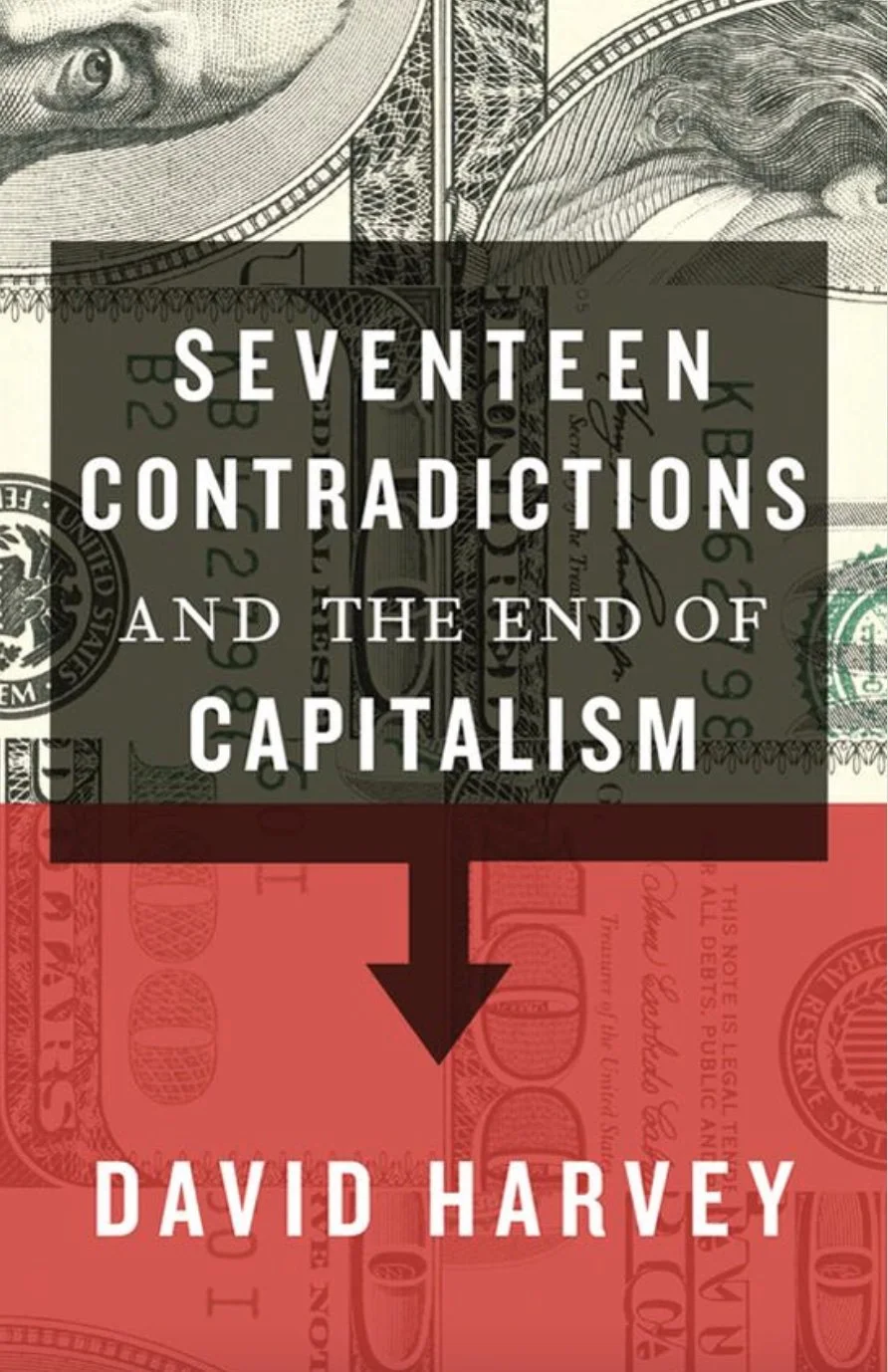
David Harvey, Fellow of the British Academy, formerly professor of geography at Cambridge and Distinguished Professor of Anthropology & Geography at CUNY, is an unrepentant Marxist and self-avowed anti-capitalist. He is regarded as one of the pre-eminent contemporary interpreters of the writings of Marx. For this reason, his 2014 book, Seventeen Contradictions and the End of Capitalism, is particularly worthy of note. Harvey, himself, described it in 2015 as “the most dangerous book I have ever written.”
Before engaging with Harvey’s content, the most obvious aspect of Seventeen Contradictions is the communication of the idea that such constrictions exist; that is, that capitalism has contradictions (although Harvey claims it is capital, rather than capitalism, that is the target to of ire). This is clearly an assertion that it is worth evaluating.
Beginning definitionally, we must ask ‘what is capitalism?’ and, if there is more than one answer to that question, then ‘to which capitalism does Harvey refer?’ Without engaging with the first question deeply, it is readily clear that Harvey is addressing capitalism as that system in which we now find ourselves or, as it is dynamic, in which we found ourselves in 2014 in the wake of the world’s most profound financial crisis (economically, although not socially) of modern capitalism. In this and other writing, his particular focus for criticism is what he calls neo-liberalism.
The neo-liberalism he criticises he associates explicitly (Harvey, 2007) with Margaret Thatcher, Ronald Reagan, Helmut Kohl and Augusto Pinochet. This is a very broad brush stroke. They are, respectively (i) a liberal Conservative and former research chemist and practising Methodist who quoted Francis of Assisi in her first public statement as Prime Minister, (ii) a religious conservative who, during his presidency preached fiscal restraint while tripling federal debt, (iii) a political historian and conservative Catholic Christian Democrat whose early policies were distinctly ordoliberal, harking back to the post WWII political economy of Ludwig Erhard and the inter-war ideas of Walter Eucken and Franz Böhm (similar to the later constitutional political economy of the Virginia school of public choice), and (iv) a military dictator who led a junta responsible for in excess of 3200 deaths and desaparecidos de la dictadura, whose 1973 coup d’état had active support of the US administration of the time and whose junta’s repressive tactics enjoyed tacit acceptance by the US administration of the time.
To find clear economic commonality between such a diverse group in materially differing contexts is an unworthy oversimplification. It would be more accurate to say one was an aspiring Hayekian liberal; one pretented rhetorically to be liberal but wasn’t at all; one clearly was a liberal, at least economically; and one wouldn’t know which end of the shovel he was using to bury those for whose murder his junta was responsible was the liberal end. But he did pay some attention to the recommended monetary strictures of economic liberal and strict opponent of the utility of monetary illusion, Milton Friedman, to bring under control Chile’s spiralling inflation.
We might even, at this point, acknowledge that capitalism does have contradictions, especially when it is separated from the philosophical and moral framework in which it evolved. If we hark back to the work of Adam Smith, the brilliant early surveyor of pre-industrial political economy, we are reminded that Smith was initially a moral philosopher and his 1759 Theory of Moral Sentiments established his public reputation. His Inquiry in to the Nature and Causes of the Wealth of Nations (1776) is socially situated within within a moral framework consistent with his earlier work. The pro-sociality of Smith’s observation of emerging social benefit from the pursuit of personal advantage rests on the bedrock framed in that earlier work. As the separated discipline of modern economics (post-Marshall) has progressed through time, it has been stripped of both its moral and its political foundations, leaving an ‘under-socialised’ shell in place of the rich flesh of socially-situated human action to which Smith attended in The Wealth of Nations.
Worse, since the Samuelson revolution of the early 1950s shifted the focus on economic analysis and interpretation to a mathematised structure incapable of reflecting political, social or moral realities as anything other than constraints on stylised functions of production, exchange and consumption, orthodox academic economics has become further removed from the socially, politically and morally situated lives of real economic agents. In partially (and only partially) fulfilling its aspirations to become worthy of description as a ‘science’ (in the physical sense), academic economics has become more of a Glasperlenspiel or Glass Bead Game, remote from and irrelevant to grounded human praxis. In Mises’ terms, the cattalaxy of market exchange is now distinct from praxeology or “general science of all and every human action”
This criticism is both valid and somewhat irrelevant. The challenge is to determine (i) what parts are valid and (ii) why and which parts are (iii) irrelevant and (iv) why and (v) to compare them and (vi) to observe what is left unconsidered.
Let’s start with the irrelevance.
Analysis of a problem set can either be holistic or reductionist. As soon as we admit reduction, analysis focuses on stylised actors or agent types, whose actions are considered homogeneously; for example: savers, entrepreneurs, households. We can use these stylised types to create, in our imaginations, a model of an element of the processes of production, exchange, consumption, savings, investment or whatever phenomena we wish to understand. We can even have several examples of each stylised type defined by attributes such as age cohort, household composition, wealth, and so on. From manipulating the economic actions of these stylised agents, we can glean greater understanding, as some level, of the phenomena under analysis. We can then consider what these enhanced imaginary or theoretical understandings can tell us about the behaviour of real agents acting in the world.
These insights, like their modelled impacts, will range from trivial to profound. Crucially, they can never tell us what will occur in the future. But they can offer insights and assist with the formulation of policy positions which can be subject to further modelling and further efforts of imagination to tease out potential impacts and consequences based on putative causal chains. The validity of causation can be assessed and the presumed precision of the imagined and modelled outcomes refined, almost infinitely. At some point, the modelling must cease and decisions taken and actions effected. But the subsequently realised-outcomes of actual policy implemented in the real world will always differ from the initially-modelled result.
The task of analysing agents’ behaviour and reaction to emerging conditions can, increasingly, be tested meaningfully in silica. Behavioural variables of agent-based models of increasing sophistication can be simulated stochastically in population-like run sizes and adjusted iteratively to remove emerging anomalies. Such modelling is tremendously powerful, even if it can never be accurate. As a source of insight in policy formulation, it deserves far wider use than it currently achieves. As the British statistician George Box wrote (parenthetically, in the original), “all models are wrong; the practical question is how wrong do they have to be to not be useful,” (Box & Draper, 1987). As Geoffrey Hodgson (2005) explains:
❝ A crucial point here is that in economics we should not and cannot judge models in isolation . . . [T]he meaning of any heuristic model depends upon an interpretive framework that is not contained in the formalities of the model itself. If heuristic models are suitably hedged and qualified, . . . , then these qualifications form part of the interpretative apparatus for the model. ❞ (emphasis added)
That is, (per Box) models do not need to be accurate to be useful; their utility depends on their specified limits and on their subsequent application. The problem arises when we observe models that have been relied upon for inferences for which they never designed and someone has gone home crying.
This was certainly the case with the packaging of housing loans in to securities in the period preceding the financial crisis of 2007-8. The problem was not that the original failure-rate-based risk models were wrong, but that actions resulting from the modelling altered actors’ incentives and behaviours in the underlying market, resulting in the presumptions about the uncertainty of valuation of the resulting securities growing invisibly and massively (a classic example of what George Soros called reflexivity). And, as John M. Keynes averred, the prospect of “the future being different from the present is so repugnant to our conventional modes of thought that we, most of us, offer great resistance to acting on it in principle,” (1937). That is, the modelling on which the resulting securities were based was, at the very least, insufficiently imaginative. The models used changed the world they were modelling, but were not adequately adjusted to reflect the newly-emerging reality.
Harvey begins the prologue of Seventeen Contradictions with the following statement:
❝ Crises are essential to the reproduction of capitalism. It is in the course of crises that the instabilities of capitalism are confronted, reshaped and re-engineered to create a new version of what capitalism is about. ❞
However, in the case of the 2008 global financial crisis and the rampant fraud that preceded it, the mechanisms of adjustment were thwarted. The instabilities were confronted, certainly, but little was reshaped (other than the introduction of patently-inadequate mechanisms for the global governance of systemic risk — the “G-SIFI” framework), nothing was re-engineered and well-deserved prosecutions for fraud were not pursued. Causes were not properly identified; transgressions were not punished; costs were not realised; lessons were not learned. The result has been a version of Harvey’s most telling observation:
❝ the manner of exit from one crisis contains within itself the seeds of crises to come. ❞
He explains that crises bring about . . .
❝ . . . dramatic changes in ways of thought and understanding, of institutions and dominant ideologies, of political allegiances and processes, of political subjectivities, of technologies and organisational forms, of social relations, of the cultural customs and tastes that inform daily life. Crises shake our mental conceptions of the world and of our place in it to the very core. ❞
Certainly they should but, in this case, they didn’t.
The intervention by governments across the Western world insulated those responsible for the crisis from its effects, socialising the loss across the tax base and thus failing to “cause dramatic changes in ways of through and understanding . . .” The immediacy of the seizure in the inter-bank lending market in the days following the decision the US Treasury Secretary Hank Paulson to allow Lehman Bros to fail while supporting other troubled institutions including, crucially, insurer AIG, forced the US government’s hand in structuring a recovery package. That package was ultimately the cause of the economic malaise that has followed it. The manner of exit from that crisis contained the seeds of the crisis or crises that have followed it.
By failing to force significant structural reform in US investment banking, Paulson and his successor, Timothy Geithner who, at the time of the crisis, chaired the Federal Reserve Bank of New York, have encouraged US investment banks to continue to behave and to operate much as they did previously, with few if any of their prior assumptions substantially revisited. Notably, Paulson was formerly CEO of global investment bank Goldman Sachs; Geithner is presently chariman of multi-national private-equity firm Warburg Pincus.
Nonetheless, it is true that, among those negatively impacted by the collapse of the US housing market in 2007 and by the on-going economic malaise affecting the economies of North America, Europe and Australasia, there have been “dramatic changes in ways of thought and understanding, of institutions and dominant ideologies, . . . etc.” Public distrust of politics and politicians has grown, economic inequalities have increased dramatically, reinforcing the principal economic trend of the preceding 30 years which had, by 2008, produced a “left-behind lower-middle-class in Western economies” (Lakner & Milanovic, 2013), creating fertile ground for the emergence in Western polities of disaffected voters and nationalist, populist politicians appealing to their discontentment. These pressures represent a failure of practical political economy and, in that sense, a failure of economics to inform decisions required about the political framework in which the operation of modern, financial capitalism is allowed to operate.
That such a failure is allowed to occur due to political influence in favour of the perceived interests of a class of economic agents is a also, clearly, a contradiction in the current political and social context of the capital-based system. It is a failure of democratic politics certainly; and of the structure of modern political economy and the regulatory agenda and structures implemented to constrain aberrant market behaviour. The question of whether it is an inherent failure of capital or of capitalism remains open. However, what the failure demonstrates is the necessity of a focus of economic analysis that reflects both the social and political context in which the modern system of financialised capital operates. That is, we desperately need a renewed political economy that is fit for purpose. Modern academic economics, as it has evolved post-Samuelson, does not inform properly the science of the legislator or statesman (in Smith’s words); it has been shown to be no longer fit for that purpose.
Of the contradictions raised by Harvey, many are attributable to the traditional Marxist misconceptions about the economic nature of value. The definition of the subjective basis of value by Austrian political economist Karl Menger in 1881 displaced the labour-based theory of value of classical economics from Adam Smith to the economists of the German Historical school, including Roscher, Knies and Schmoller to Karl Marx. In much the same way, the labour theory of value had displaced the earlier, land-based theory of value of the French physiocrats. While Marx’s sociology was profoundly insightful, his economics was very much of-its-day.
The ‘capital/subjective theory of value’ on which capitalism is based is a recognition of the financial risk associated with the uncertainty of return resulting from the subjective basis of the value of goods and services and the demand-side freedom to choose not to purchase goods supplied at the price offered. To the consumer facing choice, the historical cost of the good is irrelevant. The historical or ‘social’ labour (in Harvey’s term) associated with the production of good or services supplied privately has already been paid for by the entrepreneur or capitalist in preceding, separate and dissociated transactions in the labour market. The provider of capital bears the risk of loss from the difference between the incurred cost of production of the good or service and the ultimately realised revenue, which may bear little relation to the cost and may, ulimately, be zero or even less-than-zero following subsequent attempts to recover the revenue.
As theorists from David Hume to Irving Fisher to Milton Friedman have, each in their turn, explained, there is no magic money tree at the bottom of the garden.
Of course, many contradictions remain. But on closer examination they are typically contradictions neither of capital nor of capitalism. Rather, they are contradictions of praxis, of political economy and of the failure properly to understand the sources both of market failure and of government failure.
The realities of market failure were expounded by Francis Bator (1958) and of the impact of asymmetric information (earning Sverige Rijksbank (i.e. Nobel) Prizes variously for John Mirrlees and William Vickrey (shared in 1996), George Akerlof, Michael Spence and Joseph Sitglitz (shared 2001)). Similarly, management of these contradictions has produced a tremendously rich vein of thought in institutional economics in principal-agent theory since Michael Jensen’s and William Meckling’s famous 1976 article and, more recently mechanism-design theory to encourage agents fully to reveal knowledge and information in a transaction setting.
Government failure has similarly been widely discussed by academic economists and political scientists alike, from Aaron Wildavsky to James Q. Wilson to Anthony Downs to George Stigler and, loudly and often, by James Buchanan, originally famously with Gordon Tullock in their landmark 1962 work The Calculus of Consent, but more vociferously independently. More recently, LSE economist Julian Le Grand (2009) has proposed a theory of government failure, drawing heavily on the 1979 work of Charles Wolf of RAND Corporation.
The moral insights of Adam Smith find their ultimate expression in John Rawls’ (1971) concept of justice as fairness, arrived at both through the sympathy of Smith’s Moral Sentiments and the rule-utilitarianism of John Harsanyi (1955) and, in the rational calculus of Rawls’ application of Harsanyi’s work, as ‘the veil of ignorance’. One way to think of this mechanism is as an enforced, rational, ex ante selection of Smith’s sympathy in the design of social institutions to produce openness and Rawls’ more questionable maximin (Pareto-optimal redistributive) criterion. While it is not irrefutable, it is tremendously powerful.
Ultimately, of course, Karl Popper (initially in 1943) was right. Rights, of any flavour, are only solid if there is a government to enforce them.
There are enough flaws of imagination, ignorance of theory, flaws of implementation, opportunties for capture and rent-seeking and genuine contradictions of political economy (such as Popper’s own paradox of tolerance) that we needn’t search extended interpretations of Marx’s outdated concepts of economic analysis of value creation to find fault. While subsequent economic understanding (via Menger) has shown Marx’s economics to have been flawed, his sociological insights remain sufficiently powerful to be troubling. We continue systematically to minimise or to gnore those at our peril.