
Complexity, humans & social science
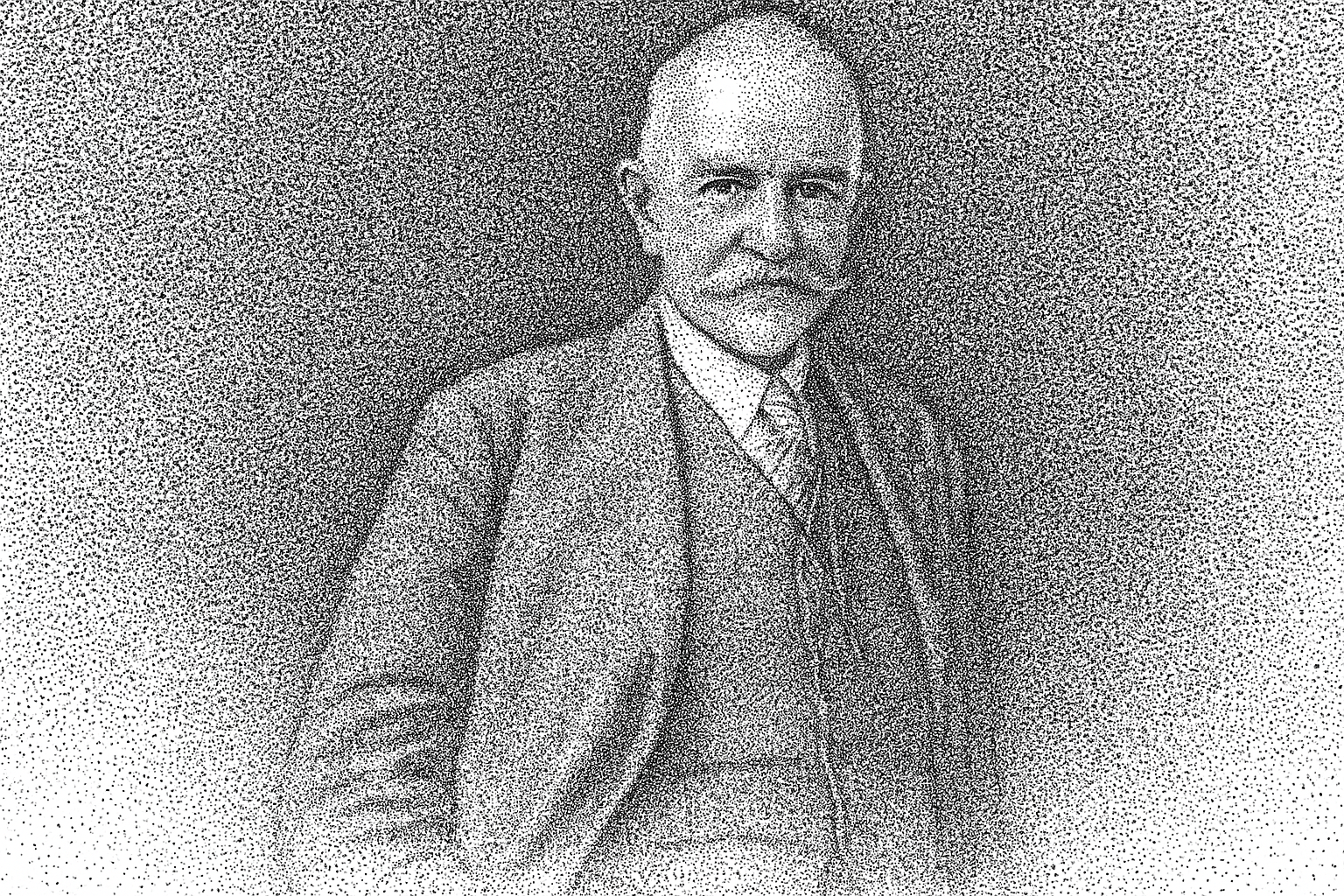
George Herbert Mead (1863–1931)
American pragmatist philosopher and social theorist
Understanding futures and emergence in complex human systems
The world in which humans live, interact, exchange and transact is complex. Also, the unpredictability of human behaviour make that world technically complex, making positivist assertions of future states problematic. To get around that, we must, as a matter of priority, incorporate in to our analysis of human systems mechanisms to capture, reflect and model that complexity. This is best achieved through in silica simulation and exploratory simulation.
‘Complexity’ is a term used in multiple settings with varying nuances of meaning. We need to be clear to which kind of complexity we are referring. Let's start there:
Steven M. Manson, (2001) “Simplifying complexity: a review of complexity theory,” Geoforum, 32 (2001): 405-414
❝ Any definition of complexity is beholden to the perspective brought to bear upon it. While it is possible, therefore, to examine complexity on a discipline-by-discipline basis, breaking complexity research into three major divisions affords a more coherent understanding of complexity theory.
Algorithmic complexity, in the form of mathematical complexity theory and information theory, contends that the complexity of a system lies in the difficulty faced in describing system characteristics.
Deterministic complexity deals with chaos theory and catastrophe theory, which posit that the interaction of two or three key variables can create largely stable sys- tems prone to sudden discontinuities.
Aggregate complexity concerns how individual elements work in concert to create systems with complex behavior.
❝ . . . there are separate kinds of complexity that have different and sometimes con ̄icting assumptions and conclusions. This said, algorithmic, deterministic, and aggregate complexity share more than just the complexity label. To a certain extent, they share the same historical antecedents . . . In disciplinary terms, researchers often apply different kinds of complexity to a single problem with the understanding that these approaches are complementary. Similarly, given that all three kinds of complexity are interested in the often mathematically intractable aspects of systems, they regularly rely on computational settings of non-linear mathematics and software simulation. Most importantly, all three kinds of complexity are concerned with how the nature of a system may be characterized with reference to its constituent parts in a non-reductionist manner. ❞
. . . .
Algorithmic complexity
❝ Algorithmic complexity theory makes two relatively ancillary contributions to complexity theory overall.
One measure of algorithmic complexity calculates the effort required to solve a mathematical problem. In some cases, a problem is so complex or specifed in such a way that it is unsolvable. Spatial statistics and geographic information science face this kind of complexity. Some problems, such as enumerating all permutations in a resource allocation situation or ®nding the shortest path through a network, are very hard to solve in non-trivial cases. This first form of algorithmic complexity is useful because it guides practitioners in their choice of technique.
The second, more touted aspect of algorithmic complexity lies in information theory . This body of work identifies complexity as the simplest computational algorithm that can reproduce system behavior.
. . . .
Deterministic complexity
❝ Deterministic complexity lies in chaos and catastrophe theories. In some respects, these theories are different, but they are similar in use and import. Chaos theory holds that there exists a true chaos in keeping with popular usage and a robust chaos that is seemingly random but in fact is the manifestation of some accessible, underlying order. Catastrophe theory deals with systems that experience large and abrupt changes in some characteristic due to a small change in another.
Deterministic complexity has four key characteristics:
the use of deterministic mathematics and mathe- matical attractors;
the notion of feedback;
sensiitivity to initial conditions and bifurcation; and
the idea of deterministic chaos and strange attractors.
. . . .
Aggregate complexity
❝ Complexity research increasingly considers systems of linked components, or aggregate complexity. Algorithmic and deterministic complexity rely on simple mathematical equations and a number of assumptions of how complex systems work. Aggregate complexity instead attempts to access the holism and synergy resulting from the interaction of system components.
In order to understand aggregate complexity, it is necessary to explore a key set of interrelated concepts that define a complex system:
relationships between entities;
internal structure and surrounding environment;
learning and emergent behavior; and
the difererent means by which complex systems change and grow.
A complex system is defined more by relationships than by its constituent parts . . . Understanding and tracing the relationships of a single entity is difficult, while tracing them in an entire system verges on the impossible. Given the number and variety of these relationships, they extend beyond simple feedback into higher order, non-linear processes not amenable to modeling with traditional techniques.
. . . .
❝ The chief value of aggregate complexity is its challenge to conventional notions of stability and change. Science in general sees systems of interconnected elements, such as economies or ecologies, as stable entities. This view has been critical to the success of science. It is also useful, however, to see complex systems as constantly changing their internal structure and external environment through (1) self-organization, (2) dissipative behavior, and (3) self-organized criticality.
Mainstream economics, for instance, studies stability and repeated patterns, while complexity research is interested in multiple equilibria, non-predictability, lock-in, inefficiency, historical path dependence, and asymmetry'' (Arthur, 1999, p. 108). Complexity also questions the long-held assumption that ecosystems evolve towards an unchanging climax structure (Worster, 1985). It may be more fruitful to consider ecological landscapes as existing in a constant state of ̄flux (Goerner, 1994; Philips, 1999).
. . . .
❝ A potential answer to these methodological diffculties is the increasing sophistication of computer simulation tools that allow exploratory simulation (Conte and Gilbert, 1995; 4). Silicon-based simulation is a manifestation of possible system outcomes that are not preordained and deterministic (Thrift, 1999). This said, model results can reflect underlying programming more than the phenomena modeled.❞